Wednesday, July 20, 2022

Quarantine on the Côte d'Azur

As I mentioned in my previous post, I had been experiencing a scratchy throat and a dry cough, which I attributed to the air conditioning and dry air in the coach combined with the abundant cigarette smoke everywhere.  Although I did not have a headache or fever, I felt a little “achy,” so I decided this morning I should use one of the rapid antigen Covid tests we had brought with us.  It revealed the dreaded "T" line:

 
We contacted Bruno and our Wellness Director, Adrian, immediately, and Bruno said we should go across the street to a pharmacie for an official test.  It confirmed that I was positive for Covid, although Martha tested negative, so for us, the tour was over per Trafalgar policy.  And per French law, I was also required to quarantine for seven days, although Martha did not have to.  Bruno met with us and put a positive spin on things.  “You could not be in a better place,” he said.  “There are cafes, brasseries, all kinds of places around here.  In some places on the tour you are in the middle of nowhere.”  And fortunately, we had paid for an insurance policy that covered Covid.  Indeed, some of our friends on Facebook who had been following our trip, while sorry that I had contracted Covid, said that the French Riviera was not a bad place to spend a week. 

We were disappointed, of course, but decided to make the best of things.  I couldn’t help but check the schedule each day, though, and I remembered that the tour group would be staying in Nice for the day:

The sun-kissed shores of the French Riviera are yours to explore today. Consider relaxing on the beach with your fellow sun-worshippers or an Optional Experience could see you visit the hilltop town of Saint-Paul-de-Vence, a popular haunt for actors seeking a relaxing retreat. In your free time, soak up the fresh sea air and perhaps indulge in a delicious Salade Niçoise.

We had also signed up for an optional drive to the medieval hilltop town of St. Paul, an artists’ paradise, a perfumery, and a drive along the coast to a restaurant for lunch.

Our room was one of the nicest we had stayed in, though, facing the beautiful Hôtel La Villa, built in 1920 in the Belle Epoque style with rounded towers.


On the corner was a beautiful church, Eglise Protestante Unie de Nice, ca. 1886, with a shady little park out back. The park and the street below, Boulevard Victor Hugo, were lined with tall plane trees, which were imported to the south of France in the 19th century and planted extensively.  I had never seen a plane tree before visiting Provence.


The room had another rare feature in the hotels where we had stayed thus far:  two chairs.  Martha found an ironing board in the closet, and we set it up at the perfect height to serve as a kind of “bistro-ironing-board table,” and while I stayed in the room reading, taking naps, and watching French television, she went out into the city and returned with dinner, such as goat cheese salad and paella from a place down the street, and delicious quiche she found just around the corner.  And, of course, the doctor had prescribed ice cold Côtes de Provence rosé as well!  My symptoms were mild; I had not lost my sense of taste or smell, and I had a good appetite.


So every day I would wait for Martha to return, eager to see what delicious food she had foraged from the plentiful patisseries and brasseries all around us – or the hotel itself, which also offered some good choices – and tell me about her adventures.  On this first day, she walked all the way to the beach, the Plage de Carras, about a half-mile away, and told me about a new feature the City of Nice was providing for the first time this summer for people with disabilities, called
Handiplages.  I read about it later:  “It is not necessary to present a certificate of disability or a reservation notice – just to go there and relax. It follows then that anyone with specific needs can be welcomed and accompanied for a safe swim (people with disabilities but also the elderly who may have difficulty moving).”  There were special lifeguards on duty to assist, and Martha described how she had watched an elderly woman being gently helped down a sort of carpeted ramp to the soothing waters of the Mediterranean. How wonderful to provide such a service!

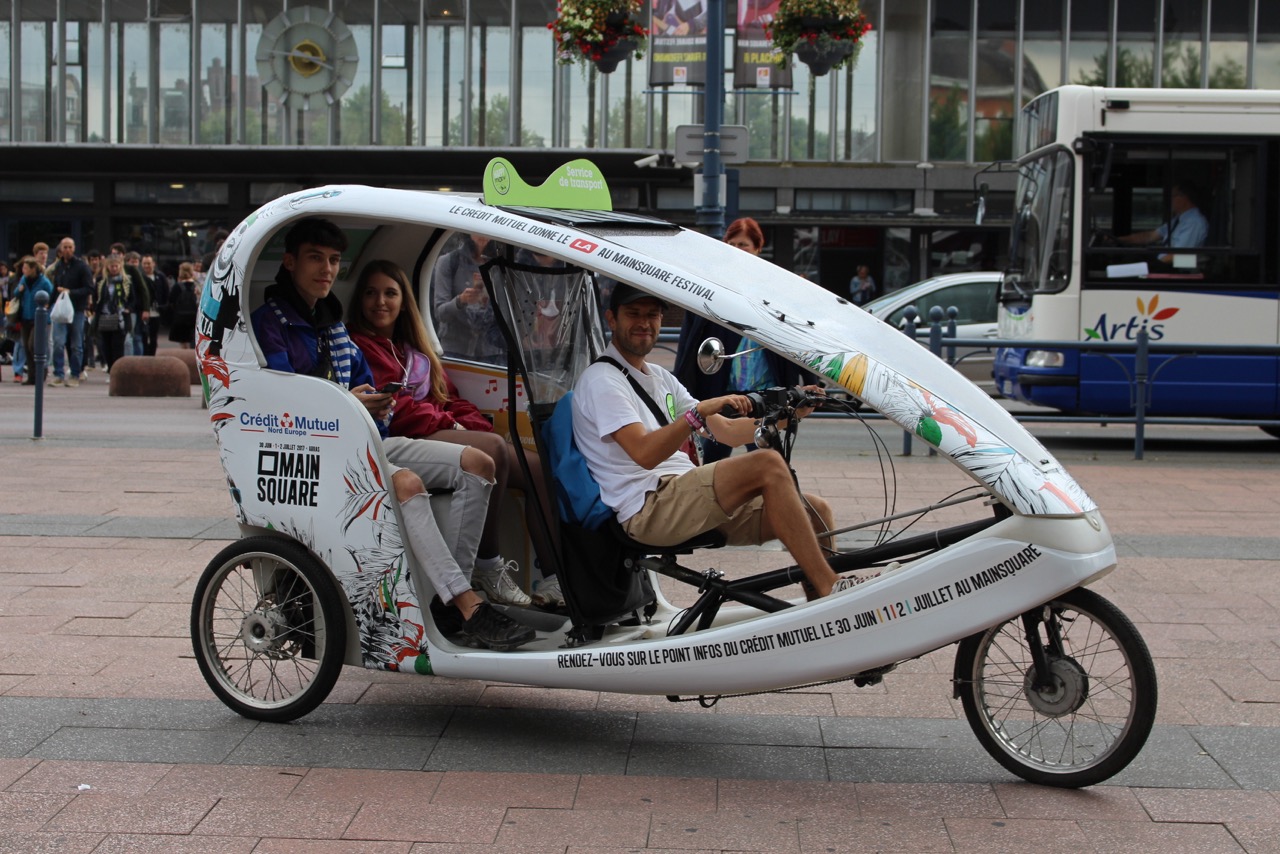
After having explored the area all afternoon, my faithful forager told me that she had decided to take a conveyance called a velo taxi from a company called O'Bicycle.  She had asked a driver how much it would cost to take her to the hotel.  “Fifteen Euros,” he said.  “Too much,” she replied.  “I walk,” and started to walk away.  He quickly said, “For you, Madam, Ten Euros!”  Despite the language barrier, my frugal, faithful wife knew when she was being taken advantage of!

Tuesday, July 19, 2022

Avignon, Monaco, and Nice

This morning we were asked to have our luggage ready at 6:30 a.m. for a 7:30 a.m. departure, even earlier than yesterday.  We had a long way to go today.  We began driving south through the Provence region of France, known for among other things its lavender, nougat, and Côtes de Provence rosé wine.  We stopped at a rest area, and Bruno returned to the coach with a bag of nougat he had purchased, which he passed around the coach.  I don’t believe I had tasted that particular confection for many, many years, and it was surprisingly delicious.  The Côtes de Provence rosé wine was something we would be sampling over the next few days.  “It is against the law to drink anything else in this part of France in the summer!” he told us, and we tried to heed his advice at every opportunity.

We could see mountains off to the east, now, the beginning of the Alps.  Bruno told us that one reason why Nice and Monaco (our destinations at the end of the day) were so popular was that you could drive for an hour and be skiing in the Alps. 

Our next stop was Avignon, a city set on the Rhône River, which in the 14th century was the seat of several Catholic popes.  It remained under papal rule until 1791 when it finally became part of France, and that legacy could be seen in the Palais des Papes (Popes' Palace) in the city center, which was surrounded by medieval stone ramparts.  But the first thing we saw in Avignon was the famous Pont d'Avignon, which is the subject of a French nursery rhyme dating back to the 15th century and which is for some reason embedded deeply in my mind.  Perhaps Miss Satterlee (see post of July 11), who taught her students many Christmas carols in French that I recall to this day, also taught us this song:

Sur le Pont d'Avignon
L'on y danse, l'on y danse
Sur le Pont d'Avignon
L'on y danse tous en rond.

(On the bridge of Avignon
We're all dancing, we're all dancing
On the bridge of Avignon
We all dance in circles.)

It is a bit of a mystery exactly why anyone may have danced on this bridge across the Rhône River, which was washed away in the late 1600s.  Only part of the medieval structure remains, and we could see its ruins as soon as we left our coach to visit this charming little city.

The Palais des Papes was very impressive, and we were left as we had been on the previous day on our own for several hours to explore the area, which was filled with little shops and cafés.

It was here that Martha bought, among other things, some lavender to bring back home.  Bruno had told us, “Your dirty clothes, they might start to not smell so good at some point, so put a little bag of lavender in with them and they will be just fine!”  We had lunch at a little café in a cobbled pedestrian courtyard, accompanied with a glass of the Côtes de Provence rosé recommended to us. 

In addition to lavender and good wine, Provence was known for the Côte d'Azur, what  we call the French Riviera, and for Monaco and the city of Nice, the jewels on that beautiful coast and our destinations for the night.  We drove to Monaco first and caught out first glimpse of the Mediterranean Sea, gleaming that special azure, a color I have not seen anywhere else.  


We went through several tunnels cut into the stone.  Monaco, officially the Principality of Monaco, is a sovereign city-state bordered by France to the north, east, and west.  It also happens to be the place where perfume was invented, and was much appreciated I am sure by the people at the time, who generally bathed only twice a year (if they needed to).  It was believed at the time that bathing was an unhealthy thing to do.  Property here is worth €60,000 per square meter.  Bruno provided a hilarious account of the inner political intrigues and scandals of Monaco and its monarchs over the years as our coach driver maneuvered around the narrow streets of Monaco and finally parked in a huge parking area located under the city.  Why waste precious land for parking above ground?

We disembarked and went up a series of escalators and elevators to the Saint Nicholas Cathedral, or Monaco Cathedral, where Prince Rainier and Princess Grace (the American actress Grace Kelly) were married.  Inside the cathedral, among other royalty, were the modest graves of the Princess and her husband.  It was a beautiful place, surrounded by tropical palm trees and flowers.

 
During the course of the day, I had developed a scratchy throat and a dry cough, which I attributed to the air conditioning in the coach.  We left Monaco and drove back to Nice, and I felt just fine when we got off the coach and walked to an outdoor café for dinner.  We sat with some new friends, Brenda and Susanna, and thoroughly enjoyed an al fresco dinner paired with cold Côtes de Provence rosé, which seemed to be the only sensible thing to drink in what were becoming increasingly warm temperatures.

We arrived finally at our hotel in Nice, the Holiday Inn, which was more spacious than some of our other accommodations, and with which we would become closely acquainted over the course of the next few days.

Monday, July 18, 2022

Beaune and Lyon

This was the official first day of our Trafalgar tour, the coach leaving right on time at 7:45 a.m.  The traffic leaving Paris was heavy, so it was clear why Bruno had wanted to leave the hotel so early; in one hour’s time, we had only gone 14 miles.  I was struck again by the beautiful, modern architecture on the way out of Paris.  We passed the building that houses Microsoft France and Microsoft Europe and it is a good example:


As I noted in an earlier post, most of the cars on the road were sub-compact.  I never saw a pickup truck the entire time we were in France.  Many of the vehicles were electric, too; we saw an EV Mini Cooper, as well as a full-size city bus.  Cars were lined up at charging stations at the rest areas, which as in the UK are directly on the highways in service areas so that you do not have to exit for a fuel or comfort stop as you do in the US (with the exception of Florida’s Turnpike).

The trucks, interestingly enough, also looked completely different.  They consisted entirely of “cab-over” trucks with flat fronts, the cab located over the engine, rather than in the US where cabs are behind.  I learned that these trucks are lighter and have shorter wheelbases, making them more compact, maneuverable, and easier to handle in urban areas.

As we left Paris, the countryside was quite beautiful, rolling hills, hay waiting to be baled (there was no rain the entire time we were there), and fields of sunflowers.  As in the UK, there were no billboards, junk cars, or dilapidated buildings.  We passed a beautiful chateau on a little knoll, the kind of place I could gladly have explored all morning.  

Bruno told us that we were in the Burgundy region, which is known for its fine food and wine – escargot (which is eaten only on special occasions like Christmas), fondu, beef bourguignon, and Chablis, the well-known white wine named after the town by the same name we passed along the way.  It is also known for “Kir,” a drink made from dry white wine and crème de cassis (a sweet, dark red liqueur made from blackcurrants).  With the addition of champagne, the drink is called “Kir Royale.”

He also told us a little more about the French way of life.  France is the world's largest net exporter of electricity due to its very low cost of generation, relying mostly on nuclear power.  It has the fifth largest GDP in the world, and its citizens enjoy the benefits of a modern welfare state.  Health care and university education are both free, and most workers enjoyed five to seven weeks of vacation each year.  If you lose your job, Bruno said, the government will help you find a new one, and will pay you 80% of your salary as unemployment in the meantime for up to four years.  I wondered how most American workers, fearful of “Socialism,” would feel about benefits like these.

Our first stop was Beaune, a walled town in the center of the Burgundy region.  Surrounded by the Côte d'Or vineyards, the town is known for its cobbled streets and the Hôtel-Dieu (Hospices de Beaune), a 15th-century former hospital which is now a museum, recognized for its colorful, geometric-patterned tile roof.


We toured the hospital – there was an optional audio tour you could take on your own – and then walked down the cobbled streets for awhile.  One thing we like about Trafalgar tours is that there is ample time to stop and explore on one’s own.  We found a little sidewalk café that offered take-out – healthy food, which we ate at a little bistro table on the pedestrian street outside.  It was a pretty little Town, a good place to spend a longer time than an afternoon - perhaps . .  an entire summer?

We boarded the coach again and arrived in Lyon, the third largest city in France at the junction of the Rhône and Saône rivers.  Its history goes back 2,000 years to the time of the Romans, and there is still a Roman amphitheater there (the Amphithéâtre des Trois Gaules).  We then took an optional tour of the city with an informative guide, Sylvie, who took us through the old part of the city known for its traboules, secret covered passageways between buildings that she said were often used by French Resistance fighters escaping Nazis during World War II.  We passed through gates into dark, twisted passageways and emerged into new streets, and could easily imagine how you could elude a pursuer here.


Lyon is also known for its painted walls, and Sylvie took us to some of them, explaining who the famous characters were who were depicted.  


It is a vibrant and beautiful city, filled with history.  At the end of our guided tour, we stopped at L’Espace Carnot and enjoyed some regional food – salade Lyonnaise, risotto, and sorbet for dessert.  The dinner began with (what else?) a glass of Kir.  

Now where can I find crème de cassis in our area?

Sunday, July 17, 2022

The Eiffel Tower

The longer we are in Paris, the more we have come to appreciate its charm and beauty.  It is not difficult to see why so many people emigrate to the City of Light, and end up staying a lifetime.  As one woman in Woody Allen’s film Midnight in Paris says, “That Paris exists and anyone could choose to live anywhere else in the world will always be a mystery to me.”

Surely the Eiffel Tower is the most famous landmark of that city, visited by seven million people every year.  We had originally signed up for a “skip-the-lines” tour for July 14, but somebody must have forgotten that was Bastille Day so it was cancelled.  We rescheduled for this morning, and there were already people lining up early on a Sunday morning as there had been at the Louvre.  Our tour guide, also named Natalie, had come from Ukraine and had been here only four months; she had been an English teacher there and probably spoke it better than French.  But while we felt sorry for her plight – who knows what tragic circumstances had forced her to leave her country when the war started? – it soon became clear that she did not know as much about the Eiffel Tour as she should have (and as I had learned from Rick Steves's Pocket Paris, which I had been reading since Martha gave me a copy).  And despite the “skip-the-lines” tickets, we still had to wait in very long lines for admission.

We did learn from her, however, that the tower had been designed by Gustave Eiffel (who also designed the Statue of Liberty), with construction completed in 1889 as the centerpiece of the World’s Fair, celebrating the centennial of the French Revolution, and was originally bright yellow.  There were many in Paris at the time who considered it a monstrosity.  A group of painters, poets, writers, and artists who called themselves the Committee of Three Hundred opposed its construction from the very beginning.  One of them was the French writer Guy de Maupassant.  Defeated by the tower and annoyed by its immense popularity, de Maupassant couldn’t stand the sight of his “iron arch nemesis,” which seemed to follow him whenever he wanted to stroll around the center of Paris.  At last de Maupassant thought of a safe place where he could avoid the tower that he obviously despised so much: underneath the Eiffel tower itself.  Every day, he had lunch at the tower’s base restaurant, just because “inside the restaurant was one of the few places where I could sit and not actually see the Tower!”

We had no such aversion!  It is an engineering marvel, impressive from a distance but even more so as one approaches and stands in its shadow gazing upward.


We patiently waited for admission, then began the climb – 674 steps:  327 to the first floor, 347 steps to the second.  You used to be able to climb a narrow spiral staircase all the way to the top, but today you must ride an elevator from the second floor to the summit.  From time to time, they stop running the elevator when crowds become too dense, so we felt lucky to be able to squeeze in for the ride to the final third level. The lines and the passengers riding in the final elevator were very crowded!  Almost nobody was wearing a face mask.  This was not the first time (standing in long, closely-packed lines at Heathrow had been another) when we had worried about contracting Covid on this trip.  We knew it was a risk, but we are both vaccinated and had received the second booster as late as May, so we thought it was an unacceptable one.    

The views from the top – 906 feet at this level – were every bit as spectacular as we had been told.  Below us we could see the City of Light spread out in dazzling clear morning light, the Seine river curving dark blue, the parks and the boulevards of the city.  It seemed even taller from up here!  We stood in a short line to order two glasses of champagne, a tradition for those who make it to the top.

We had lunch around the corner at Le Café Castel, and then made our way back to the hotel.  This was the official first day of the Trafalgar Tour, and we were to meet our Tour Director and fellow travelers (46 of us) in the courtyard in the afternoon.  Over the next 12 days we would come to know some of them very well.

We met our Tour Director, Bruno Courtois, who had already sent us several welcoming e-mails.  He was a slim man in his 50s, very professional in his manner, and he spoke English very well, although with a French accent that was sometimes a little difficult for some of the group to understand.  Over the next few days we would find that he had an easy-going French sense of humor, often very subtle.  He warned us, for example, that the French who visited the Côte d’Azur (the French Riviera) often participated in a “very dangerous” activity, bathing in the sea.  We also met Adrian, a young man who was the Wellness Director, a new Trafalgar feature since the pandemic.  Adrian stood at the door to the coach each day dispensing hand sanitizer and good-quality face masks to all who wanted them.  Wearing masks was optional at this point, but most of us did so in the close confines of the coach.  Bruno told us that on his last tour, ten in the group (including himself – presumably at the end of the tour) had tested positive for Covid, thus ending the tour for them per Trafalgar policy and making mask-wearing mandatory for the rest of the tour.  We were surprised at that high number – 25 percent!

We also met some of the others and learned where they were from:  Rod and Doty from Nebraska, Rich and Karen from Durham, Steve and Rosy from Canada, and several of the others.  We had not really known what to expect.  On our last tour to Britain and Ireland three years ago, most of the travelers had been Australian, and by the end of the tour we had come very close to saying “Good dye ta ya, Myte” in the morning on the coach.

By this time we had seen many of the sights of Paris on our own, so we felt like seasoned Parisians!  “Oh yes, the Louvre was wonderful!”  And, “We had champagne on the summit of the Eiffel Tower just this morning!”  We even knew how to take a taxi!  And many of the others spoke little or no French. After the meeting at the hotel, we all took a coach to an introductory dinner at the Bistro des Champs on the Champs Elysees and got to know one another better over dinner and wine, Bruno circulating among all the tables for a toast.  Afterward, we went on an orientation tour, disembarking to look at the Eiffel Tower from another angle and getting some close-up views of the Arc de Triomphe.


Bruno kept up an interesting narrative as we drove through Paris.  “We are on the Right Bank here,” he told us.  “We have a saying:  on the Left Bank, we think; on the Right Bank, we spend!”  The Left Bank is the intellectual part of the City, containing the Latin Quarter and the Sorbonne. The 17th Arrondissement is an expensive part of Paris, he said, with flats (pied-à-terres) selling for €10,000 . . . per square meter.  Rooms are much smaller than we are accustomed to in this country (I was glad we had a balcony).  When we returned to Charlotte at the end of our tour, we were surprised at the lavish size of our hotel room, which included a desk, a chair, two queen beds, and a full-size sofa.   

We would be covering a lot of ground on the first two days of our trip, Bruno told us, so we would be getting up earlier in the morning than usual.  “Luggage in the corridor at 6:45 a.m., coach departs at 7:45 a.m.”  We were accustomed to this type of schedule from our tour three years ago, though, and we had recovered from jet lag by now, so I would be out on the deck in the morning practicing my Tai Chi while the sun was just beginning to paint the upper stories of the nearby buildings pink and lavender.

Saturday, July 16, 2022

Lunch on the Seine, Champagne at the Crazy Horse

We had become familiar with the restaurants on our street, some of which I have referred to in this blog, but I think it was today that we ventured across the street to the lavarie, or laundromat.  Beginning on Sunday, we would be on the road with the tour group for several days, so this would be a good opportunity to catch up on laundry.  All of the signs in the lavarie were in French, however, which I was having trouble translating, and at one point we somehow started a washing machine filled with soapy water but no clothes.  From a tiny room in the back of the laundry, a woman suddenly emerged, her black hair tied high in a scarf and a twinkle in her eye.  I told her, as I have been telling many Parisians so far on this trip, “Mes excuses! Ma Francais est tres mauvais.”  She said, “Oh no, Monsieur your French is good!  (I always loved hearing that!)  It is my English that is bad!”  But somehow we reached across the language barrier of bad French and bad English and managed to complete a load of laundry.

Today Martha had scheduled for us a luncheon cruise on the Seine on one of the many boats that cruise up and down the river.  It was an experience we had been looking forward to, and our appetites were keen.

I always think of that lovely, bittersweet Judy Collins song when I think about the Seine, and it was going through my mind this morning:

 My father always promised us
That we would live in France
We'd go boating on the Seine
And I would learn to dance

I sail my memories of home
Like boats across the Seine
And watch the Paris sun
As it sets in my father's eyes again

We arrived in plenty of time, and had seats at a table for two directly on the water.  Our attentive waiter began the luncheon with a glass of champagne, and then brought some very good white wine with the appetizers, and then some very good red wine with the main course and the dessert.  I wish I had taken more detailed notes about the food!  Let me just say that, while we do not often eat “gourmet” food, Martha and I have had our share of delicious dinners at restaurants near and far, and without a doubt this was the best lunch I have ever experienced.  Healthy, absolutely delicious, and beautifully presented.  Photos never do justice to good food but I tried anyway.


While we were eating and drinking, our waiter described to us the sights we were seeing along the river, parading slowly by us as we passed under one beautiful bridge after another, one of them I am sure the Pont des Arts, our humble lock dangling from its railing and our key in the water below us.

Did we attempt the three-mile walk back to the hotel?  Merci, non!  We took a taxi – there seemed to be a great many of them waiting for diners to emerge from the boat.

At this point, let me mention the taxicabs in Paris.  We had taken several so far, and they were invariably terrifying.  The road is filled with bicycles, motorized scooters, and other cars, all entering intersections at the same time and by some miracle exiting unscathed.  The horn is used sparingly, but very effectively.  We have seen roundabouts in the UK, and they are becoming more common in our country now.  The "roundabout" at the Arc de Triomphe was simply a broad, six- or seven-lane circle of cobblestones, unmarked by any lines, into which taxicabs hurtled around in a counter-clockwise direction, narrowly avoiding one another.  Absolute chaos!  We would learn from Bruno (our tour guide) in a few days time that he had a French driving license, and that the test was simply to drive around the Arc de Triomphe five times and survive.

The day was not finished, however.  “A trip to Paris would not be complete,” Martha had told me a few weeks ago, “Without . . . a visit to a cabaret!”

What good is sitting
Alone in your room?
Come hear the music play
Life is a cabaret, old chum
Come to the cabaret

I was not sure what to expect.  I envisioned petticoated can-can dancers and a burlesque music hall environment.  So I was glad that Martha had found, not the overwhelming three-hour-long Moulin Rouge experience, but a smaller, equally historic cabaret called the Crazy Horse.  It’s website said:  “Le Crazy Horse Saloon or Le Crazy Horse de Paris is a Parisian cabaret known for its stage shows performed by female dancers and for the diverse range of magic and variety 'turns' between each show.” It had been founded in 1951, and was known for spectacular choreography.


The girls were, well, shall I say . . . athletic, and they were not entirely nude, but very close to it; it was not for children or for the prudish.  But I have to say that it was at all times tasteful, not lewd, celebrating the beauty of the human body in a series of  performances that almost reminded me of the Cirque de Soleil.  And it was very funny as well.  I took this photo of our hostess before she warned us all that no photographs were allowed.  “Enjoy with your eyes, not with your phones!”


After the show, we went next door and had some delicious pizza at a genuine Italian restaurant called Cantina di Luca.  And what a surprise, again! – a delicious, generous-sized margherita pizza and two glasses of fine rosé wine for only €25.00,  No tax, no gratuity.  Paris is filled with expensive white-table-cloth restaurants, but as I have said earlier, one can dine very well here on a budget.

There is another song about Paris, a World War I-era song – I think Judy Garland covered it – that I thought of after having visited the Crazy Horse:

How ya gonna keep 'em down on the farm
After they've seen Paree'
How ya gonna keep 'em away from Broadway
Jazzin around and paintin' the town

How ya gonna keep 'em away from harm,
That's a mystery
They'll never want to see a rake or plow
And who the deuce can parleyvous a cow?
 

Friday, July 15, 2022

Musée du Louvre

One of the special events that Martha had booked for us during our time in Paris was a guided tour of the Louvre Museum, the first of many adventures on this our third full day in Paris.  We had scheduled a taxi to arrive at our hotel at 9:00 a.m. and take us to the Arc de Triomphe du Carrousel, a monumental arch with a horse-drawn chariot on top, situated across the road from the courtyard of the Louvre, just south of the Jardin du Tuileries.

The extensive buildings all around made it clear that one could spend a lifetime touring this place, but at least we would have half a day with a professional guide.  In the courtyard we saw the famous Louvre Pyramid, a large glass and metal structure designed by the Chinese-American architect I. M. Pei, which serves as the main entrance.  The Pyramid was controversial at the time it was erected, but is now a landmark of Paris, the centerpiece of a renovation called the Grand Louvre project begun in 1981.  It consists of 70 triangles and 603 diamond-shaped glass pieces installed, one by one, on a structure made of 190,000 pounds of steel and 210,000 pounds of aluminum.


Lines were already forming in the courtyard, tourists who would stand for two or three hours in the sun waiting for admission.  So I was glad that our tour promised to give us “skip-the-line” access and an English-speaking guide.  We descended nearby steps into the entrance below where an inverted pyramid admitted light from above - both beautiful and impressively functional!

Our guide for the tour was Natalie, a poised, mature, elegant-looking woman who seemed to be familiar with every single object in the museum.


She must surely hold a doctorate in art history, I realized, as she took us through room after room of art that was absolutely jaw-dropping, explaining in details its origin and significance.

We went into one gallery after another, so splendid that it is difficult to describe within the humble confines of this blog.  It was as if my eyes were at a memorable feast, and by the end of three hours I could not hold another bite of beauty.

“There is so much to choose to show you,” Natalie said at one point, “So I will choose this room!”  We entered a long gallery which was lined on both sides with four-meter high paintings, which I learned was called the Rubens Room, or the Galerie Médicis.  It contains the complete series of paintings of the life of Marie de’ Medici by Peter Paul Rubens, one of the greatest painters of his time.  She was the widow of King Henri IV and the mother of King Louis XIII, and each painting represented episodes of the queen’s life.  One by one, Natalie took us around the room, pointing out historical and symbolic features in the paintings that would have completely escaped us had we, like some of the tourists we saw, been on our own, wandering aimlessly from room to room.  At one point some members of our tour group sat on benches in the middle of the gallery to rest (we had ascended and descended many stairs!), and clearly annoyed, Natalie gestured to them to get up and said, “We are here to see great art, not to relax!”

 
We also saw two very famous classical Greek sculptures, the Venus de Milo and the winged Victory of Samothrace, or the Nike of Samothrace.  Crowds had begun to increase by this time, and it was difficult to make our way around these rooms.


Finally we reached the room to which most visitors of the Louvre are drawn, the famous painting of the Mona Lisa by Leonardo da Vinci.  “Considered an archetypal masterpiece of the Italian Renaissance,” Wikipedia says, “It has been described as ‘the best known, the most visited, the most written about, the most sung about, and the most parodied work of art in the world.’”  At the far end of a line zig-zagging back and forth before us hung what seemed to be a very small painting, permitting the patient visitor only a few seconds to take a photo, often a “selfie.”


I would never belittle a painting that is clearly a masterpiece, but there is no doubt that there is a lot of hype about what is one of many, many masterpieces hanging in this museum.  I have read about the mysteries surrounding the portrait of Lisa Gherardini, wife of Francesco del Giocondo, such as the way the background on either side doesn’t seem to match up, and why she is wearing no wedding ring.  But it is that enigmatic smile, of course, which causes the most speculation.  Is she sharing a private joke with the painter?  Is she sneering?  I like to think that she is looking ahead into the future, and is amused at these long, long lines of visitors coming to see her.


We gratefully thanked Natalie after the tour and made our way back to the Jardin du Tuileries, this time having lunch at another outdoor café – smoked salmon and emmental cheese quiche and a welcome bière pression. (They do have some surprisingly good beers in France, although we had yet to discover any IPAs so far).  Realizing how close we were to the Left Bank (La Rive Gauche) and the Latin quarter, home of the original Shakespeare and Company bookstore and inspiration for our local bookseller in Highlands (see yesterday’s post), we had planned to cross the Seine and explore the area.  The book store is a famous one, opened in 1951 on the site of Sylvia Beach’s bookstore of the same name, famous for publishing Joyce’s Ulysses and as a hangout for Americans of the Beat Generation.  There were long, long lines waiting for admission to the little store, which we finally located deep in the maze of tiny streets in that part of Paris

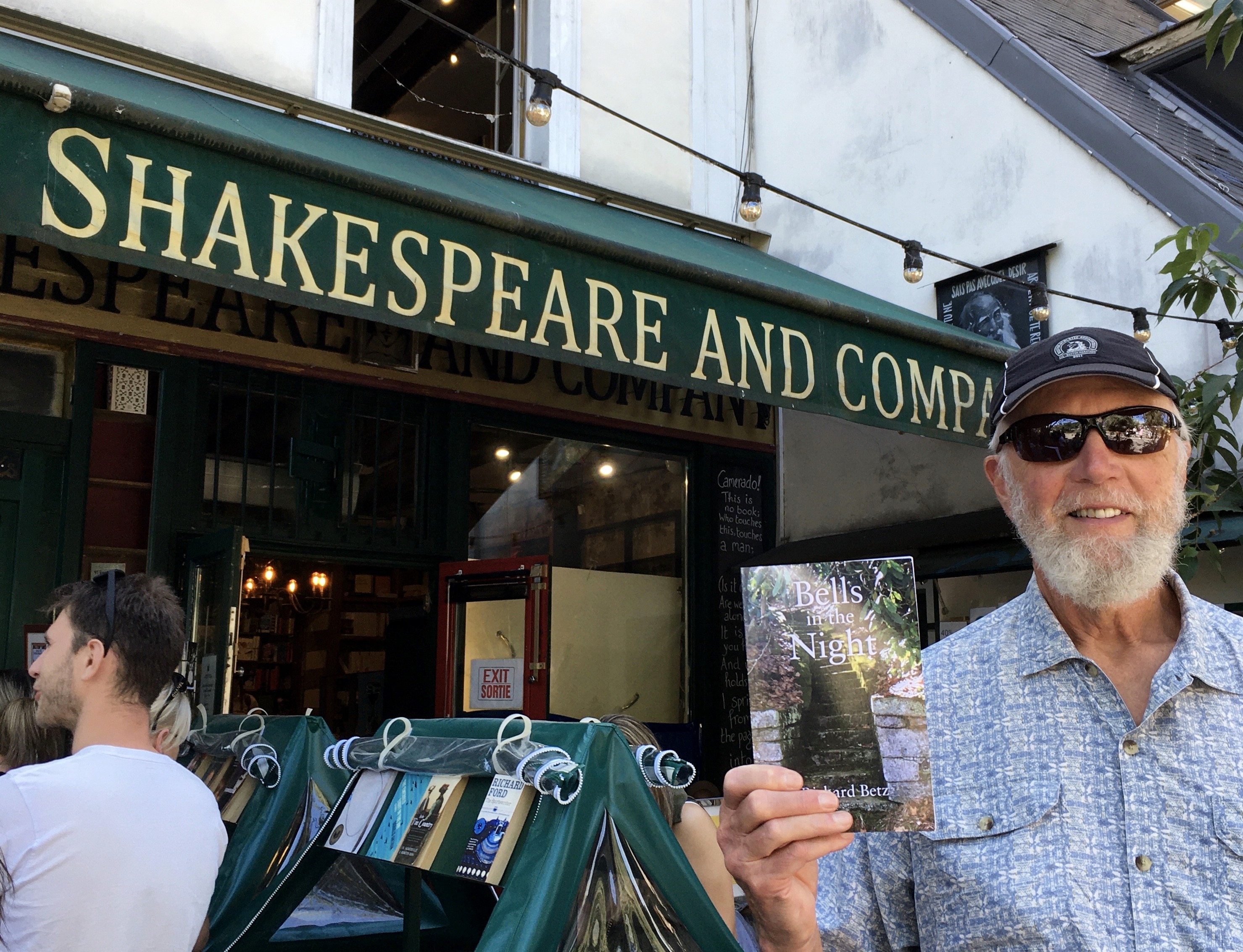
My book of poetry, Bells in the Night, was published last year, and our own local Shakespeare and Company had graciously hosted a book signing there.  Thinking of that event, I had brought a copy with me, and Martha took this photo of me outside the store.  I had wanted to go in the store and hide it on a shelf somewhere, but I was not willing to wait in line for an hour to do so.  There used to be a tradition where so-called “tumbleweeds,” vagabonds traveling to the book store, could sleep there at no cost provided they agreed to volunteer there and to read a book every day.   But today the store was too crowded for that blissful time when Allen Ginsberg and Ernest Hemingway graced its narrow aisles.


We spent some time in the area, walking the narrow streets of the Latin Quarter with its many shops.  It was here that I found something I had been looking for, a hat – a French hat, I told myself, although not a beret (to which I am philosophically opposed) – which I wore for the rest of our time in France.


We participated in another tradition in Paris on this day, too, crossing the famous Pont des Arts bridge across the Seine, where generations of couples have shared a tradition of attaching “love locks” to the bridge and tossing the key in the river below in symbolic acts of affection.  Alas, the City of Paris started removing padlocks from the bridge in 2015 due to concerns about the weight (there were literally tons of locks attached to it).  


Still, visitors manage to find a way, hanging them on temporary cables which I suppose are removed from time to time, or high on the ornamental street lights on the bridge.  We had brought a lock for this purpose and there it hangs to this day, the key thrown into the waters of the Seine.


It had been a long day, and we took a taxi back to our hotel.  Because of Bastille Day, Que pour les Gourmands was not open, but we found a little patisserie up the street in the opposite direction, Le Grenier a Pain Tocqueville, where we bought two delicious, braided baguettes, one containing mozzarella and tomato and another olives, and brought them back to the hotel.  We had discovered that the courtyard in the hotel was very, very quiet, since it was totally enclosed, and we had it to ourselves at that time of day, a welcome moment of tranquility and silence after the hustle and bustle of the crowds at the Louvre and in the Latin Quarter.

Thursday, July 14, 2022

Bastille Day

Stuart Malcolm Ferguson, who runs an independent book store in Highlands and is my Facebook friend, posted this a week ago.  “Le jour de gloire est arrivé! In honor of our Parisian namesake, come celebrate Bastille Day at Shakespeare & Co. Booksellers in Highlands Village Square on Thursday, July 14, from 4 to 6pm. We'll have live music, light refreshments and rude salesclerks--just like the City of Light!”  It was a little cruel of me, but I replied, “Sorry to miss it Stuart! We’ll be in Paris on Bastille Day!”  (And by the way we never encountered any rude salesclerks.)  “Zut alors, that's rubbing it in!” he said.

We had been cautioned by more than one Parisian, beginning with our taxi driver from the airport on the first day, not to go out into the city on July 14, or if we did to wait until apres-midi (afternoon).  There were many, many people lining the Champs Elysees – at least, that’s what I saw on TV in the lobby of our hotel, where I watched some of the parade this morning, including Emmanuel Macron waving from an open car.  Pickpockets are always a problem in Paris, although we never encountered any (and our securely-zipped pockets would have foiled them), so perhaps that is why we “Innocents Abroad” had been told not to venture out.

The 17th Arrondissement was far from the Champs Elysees, though, and we felt perfectly safe walking the shady, quiet one-mile route to the Parc Monceau, which Jean-Charles had showed us yesterday.  I should mention at this point that whenever we walked somewhere in Paris, we felt safe.  There were always other people around, and perhaps I am just naive, but I am not sure the French even have a word for “mugging.”   The sidewalks are wide and  the roads are well-maintained, and everywhere you go you see amazing architecture, iron railings and streetlights you might expect to see in a museum, and unexpected statuary.  Here is a bank we happened to see along the way.  Just an ordinary office building.

Near the entrance to the park was the museum Jean-Charles had pointed out to us yesterday (he had checked to be sure it was open on this national holiday), the Musée Cernuschi, officially the Musée des arts de l'Asie de la Ville de Paris, one of the best Asian art museums in the world.


We both love Asian art and we spent some time there, then entered the park, which today was filled with Parisians relaxing, strolling along the tranquil, shady sidewalks, and spreading out blankets on the lawn in the sun, as we would do on the Fourth of July in the US.  (A first-class fireworks display was also scheduled for later in the day – as well as military jets flying in close formation like the Blue Angels, streaming vapor trails of red, white, and blue – but still suffering from jet lag and having walked perhaps six miles by the end of the day, we did not stay up to see it.)  It was a popular place for running, too, with wide walkways and no traffic.


There were many children in the park, especially in the vicinity of the carousel, which was similar to ones in our country but somehow seemed different, seemed French,  Perhaps it was the Jules Verne miniature submarine, or the long-eared donkey.

Here is a video I shot of the carousel, and in the background you can see a small round building selling cappuccino, iced drinks, gelato, and pressed sandwiches, so small that it was hard to believe all of those operations were being carried out in the one building.  We ordered the sandwiches, made with fresh tomatoes and mozzarella, and sat at a tiny table out back, and it was very good.  One detriment to eating outside, however, is that smoking is allowed, a habit that is surprisingly widespread in France.  It seems like such a healthy country in so many other ways, its citizens for the most part slim and attractive – we rarely saw the obesity that is such an epidemic in our country – and Jean-Charles had commented on the smoking yesterday as well.  “It is one area where you are ahead of us!”

We wandered and wandered, up one street and down another, a little like Ulysses.  We were enjoying being in Paris on our own, and we were feeling very self-reliant.  We ended up on the wonderful Rue de Lévis, with its many food stalls and shops.  Not far from our hotel at this point, we decided to buy some wine and went into a wine shop, called a cave.  A very likeable young woman who spoke excellent English guided us to a good choice, and I mentioned that we were also looking for a pâtisserie – a bakery – for some good bread.  “The one we just passed?” I asked.  “No, no.  Go down the street that way and there is a little place on the right!”  There was indeed, and the bread was excellent.

Between there and our hotel there were plenty of ethnic restaurants  – Vietnamese, Argentina, Portuguese, Chinese – reflecting the ethnically diverse nature of this city.  I learned that Paris is considered the most diverse city in Europe; it is estimated that around 23% of the population migrated to the city sometime after they were born.  I am sure there are some problems here, but it is a rebuke to that dangerous and narrow-minded belief that one's own race happens to be the superior one.  Travel just a little and you will learn that there is always someone of another race or ethnicity who is richer, stronger, faster, smarter, and better looking than you are.